I few years ago, a gentleman from the states asked for research on his great grandfather, Henry Gardner Hoyt. Through a series of emails came the following history of a man called Henry Hoyt.
Born in Massachusetts in 1814, Henry Gardner Hoyt was a man carrying a deep and proud legacy—his great-grandfather was a free Black man who had fought for liberty at the Battle of Bunker Hill. Driven by an entrepreneurial spirit, Henry made his living as a skilled barber and businessman, embarking on a long journey that spanned across New England and Atlantic Canada.
In 1839, Henry was married in Boston to Emma Over, and the couple later settled in Belfast, Maine. However, life dealt a devastating blow when Emma passed away, leaving Henry alone as a working barber to care for their three young children. Facing immense hardship, he made the agonizing decision around 1850 to bind the children out to local families on an island off the coast of Maine so they would be cared for. With a heavy heart and a desire to rebuild his life, Henry moved north into Canada. He spent time on Prince Edward Island, where he married his next wife, Matilda, and welcomed a son named Edmund in 1854.
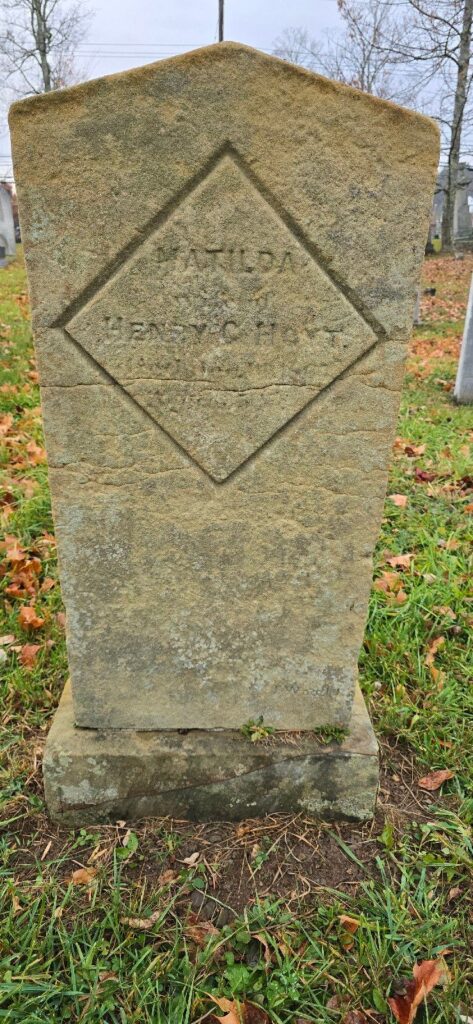
Matilda died in 1867 and is buried at the Old Parish Burying Ground.
Soon after, Henry set his sights on Nova Scotia, settling permanently in the bustling town of Windsor in Hants County.In Windsor, Henry proved to be a force of determination and community enterprise. He secured property leases on Water Street—situated right across from the train station and near the old post office that was located at the corner of Water and King Street.
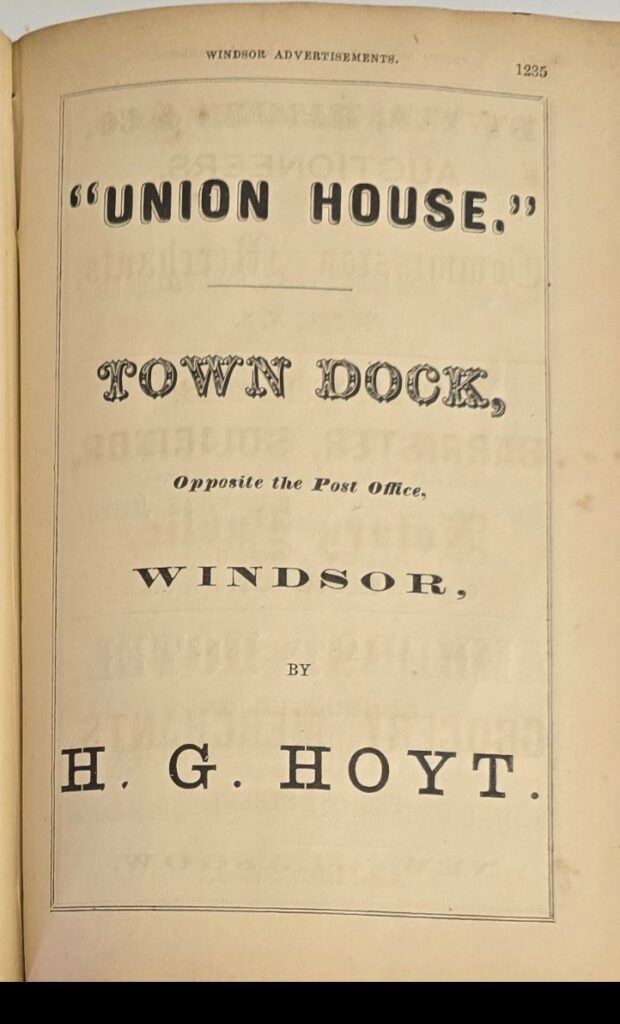
He established himself as one of Windsor’s notable Black business owners, operating the Union House. Henry’s enterprise was a multi-faceted hub of activity. Attached to his rooming house was his popular barber shop, where he cut hair and undoubtedly listened to the local stories of the town’s residents. He also provided essential room and board to locals and visitors alike, proudly placing full-page advertisements in the 1869 Nova Scotia business directory offering meals and lodging for 13 to 15 cents.
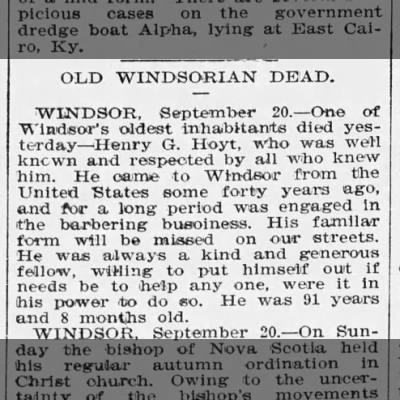
Through personal heartbreaks and new beginnings—later marrying Regina Schnare in Windsor after Matilda’s death—Henry lived a resilient life defined by hard work and independence. When he passed away on September 20, 1897 his legacy was secured not only in the local newspapers that remembered him, but in the historic footprint he left along the Water Street docks of Windsor.